— Devendra Kumar Budakoti
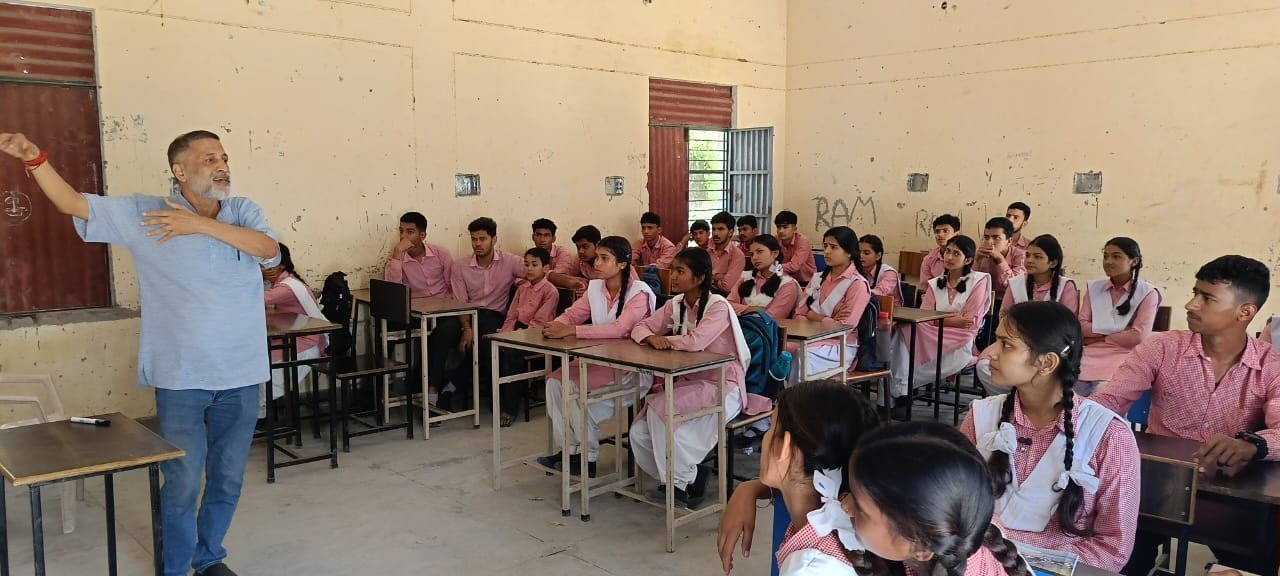
Come January, and the whole nation is gripped by examination fever as the Class X and XII board examinations approach. February and March have, over the years, become the annual peak season of fear, anxiety, and emotional stress—not only for students, but also for families and communities.
Everyone is concerned about Zindi, who is appearing for his Class XII board examinations this year. His mother, elder brother, dadi, taujis, taijis, their children, and even their spouses are all on high alert. This collective concern reflects the close-knit nature of the Indian family system, where an individual’s academic journey becomes a shared responsibility. People around Zindi constantly discuss his preparation schedule, revision plans, and how much he has memorised for the examinations.
This anxiety is not limited to students who struggle academically. Bright and intelligent students—and their parents—are equally caught in the grip of this fever. The “exam virus” is all-pervasive. Beyond immediate family members and relatives, even padosis (neighbours) are infected. For many adults, this period brings back memories of their own examination-related trauma. Knowingly or unknowingly, many of us continue to carry this unresolved stress, which often reflects in our mental health and influences how we respond to children facing similar pressures today.
India has undergone several education policy reforms, with the latest being comprehensive and ambitious. Yet, despite these reforms, the education system remains largely examination-centric. For decades, schooling has been driven by examinations, rankings, and a narrow definition of success. This system promotes rote learning and mechanical memorisation of textbooks and answers, while neglecting the development of critical thinking, creativity, emotional intelligence, and holistic growth.
Although the New Education Policy emphasises vocational education and skill development, these ideas have yet to take concrete shape within school curricula and practical training frameworks. Activities such as dance, drama, theatre, music, arts, and sports continue to be treated as non-academic or extracurricular pursuits—viewed more as amusement than as meaningful contributors to mental and cognitive development. Unfortunately, even the new generation of parents increasingly subscribes to this limited understanding of education.
A few decades ago, tuition classes were meant primarily for poorly performing students. Today, tuition and coaching have become the norm, aimed at maximising marks and grades. Students must face one examination after another—first at school and then again to gain admission into professional courses at reputed institutions. There is little respite. Vacations that could be spent hiking, camping, trekking, cycling, travelling, or exploring the countryside are instead devoted to coaching classes and revision schedules. Childhood and adolescence are steadily reduced to preparation time, dictated by competitive pressures.
In the light of the New Education Policy, the government should actively encourage alternative learning models such as Gurukul-based education and homeschooling. There should be a provision allowing any individual who has attained the age of seventeen to directly appear for the Class XII board examination under any State or Central Board. Students should have the option to choose subjects such as dance, drama, theatre, music, arts, sports, and vocational courses, with proper evaluation and grading to pursue meaningful career paths.
It is deeply troubling that an education and pedagogic system meant to impart knowledge and skills instead creates fear, anxiety, and depression among students, often leading to lifelong mental health challenges. Who will address the root causes of India’s growing mental health crisis? Policymakers and decision-makers must reflect seriously on this issue so that we nurture citizens who learn without fear and lay a strong foundation for a progressive and developed nation.
The author is a sociologist and has worked in the development sector for four decades.
