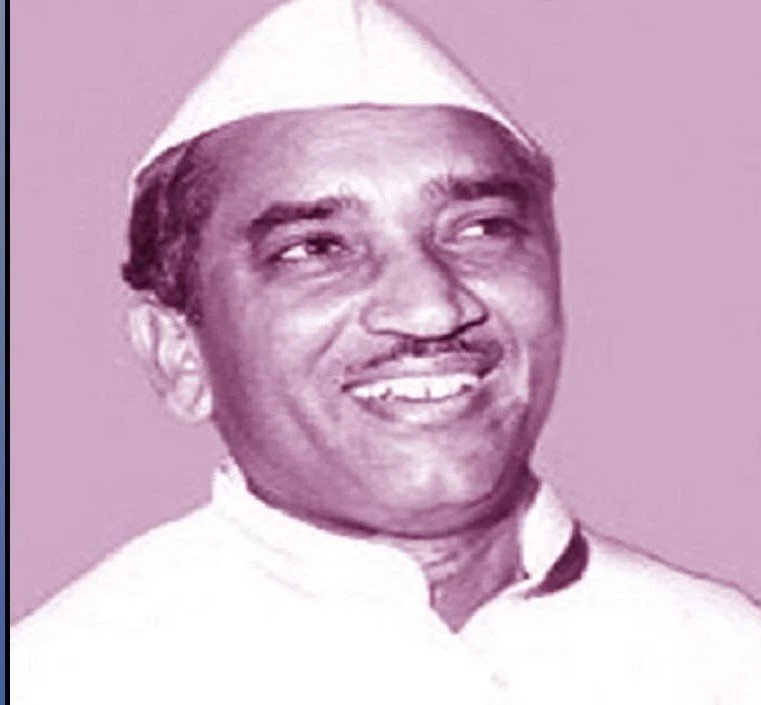
By Suresh Nautiyal Greenananda
On the death anniversary of Hemvati Nandan Bahuguna, one is compelled to look beyond the immediate frames of political success and failure, and instead enter the deeper terrain of his ethical and ideological journey. Bahuguna was not merely a practitioner of politics; he embodied a certain moral restlessness within Indian democracy—a search for equilibrium between power and principle, between governance and conscience.
Born in the Himalayan region that would later become Uttarakhand on 25 April 1919, Bahuguna carried within him the imprint of a landscape that teaches both resilience and humility. The mountains do not produce simple men; they shape individuals who understand distance, endurance, and the quiet dignity of struggle. This ethos remained visible in his political life, even when he moved through the corridors of power in New Delhi.
Bahuguna rose within the framework of the Indian National Congress, at a time when the party still carried the legacy of the Freedom Movement. Yet, his relationship with power was never entirely submissive. He was among those leaders who believed that political authority must constantly justify itself through public ethics. As Chief Minister of Uttar Pradesh, he demonstrated administrative capability, but more importantly, an ability to connect governance with social realities.
What distinguished Bahuguna in the national landscape was his deep commitment to secularism—not as a slogan, but as a lived political practice. In an era when communal undercurrents were beginning to sharpen, he consciously cultivated a politics that reached across religious identities. He is often remembered as one of the early leaders to institutionalise inclusive political gestures such as public Iftar gatherings, not as symbolic appeasement, but as affirmations of shared civic space. For him, secularism was not an abstract constitutional value; it was a daily negotiation with India’s diversity.
His political journey, however, was not linear. His eventual departure from the Congress, especially during and after the period surrounding the Emergency in India, reflected both ideological discomfort and personal assertion. Like many leaders of his generation, Bahuguna faced the dilemma of whether to conform within a centralised political structure or to risk marginalisation by dissenting. He chose the latter, and in doing so, revealed both the strength and vulnerability of independent political thought in India.
Bahuguna’s life also illuminates a recurring paradox of Indian politics: the difficulty of sustaining ethical individuality within mass political systems. He possessed intellectual clarity and administrative skill, yet his career was marked by political shifts that some critics interpret as opportunistic. However, such judgments often overlook the turbulent context of Indian politics in the 1970s and 1980s—a time when ideological certainties were dissolving and survival itself required adaptation. In this sense, Bahuguna’s shifts may also be read as attempts to navigate an increasingly fragmented democratic landscape.
His death on 17 March 1989 in Cleveland, following complications after a coronary bypass surgery, marked the end of a life that had witnessed both the promise and the erosion of post-Independence political ideals. Yet, his legacy cannot be confined to electoral outcomes or party affiliations. It resides in a deeper question he leaves behind: can politics remain humane in its pursuit of power?
In reflecting on Bahuguna, one encounters not a flawless leader, but a profoundly human one—someone who grappled with the contradictions of democracy while attempting to preserve its ethical core. His life suggests that secularism is not sustained by declarations alone, but by continuous acts of inclusion; that leadership is not defined by permanence in power, but by the courage to dissent; and that the true measure of a politician lies not in victory, but in the values he refuses to abandon.
Today, as India continues to negotiate its democratic and secular identity, Bahuguna’s journey appears less as a closed chapter and more as an unfinished conversation. His life reminds us that politics, at its best, is not the art of domination, but the discipline of coexistence.
