— Devendra Kumar Budakoti & Swagata Sinha Roy
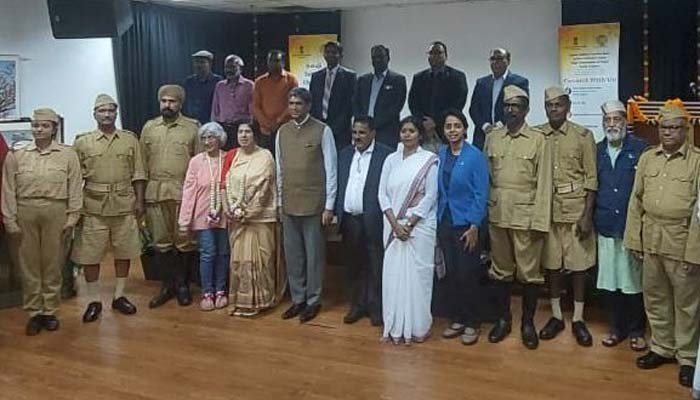
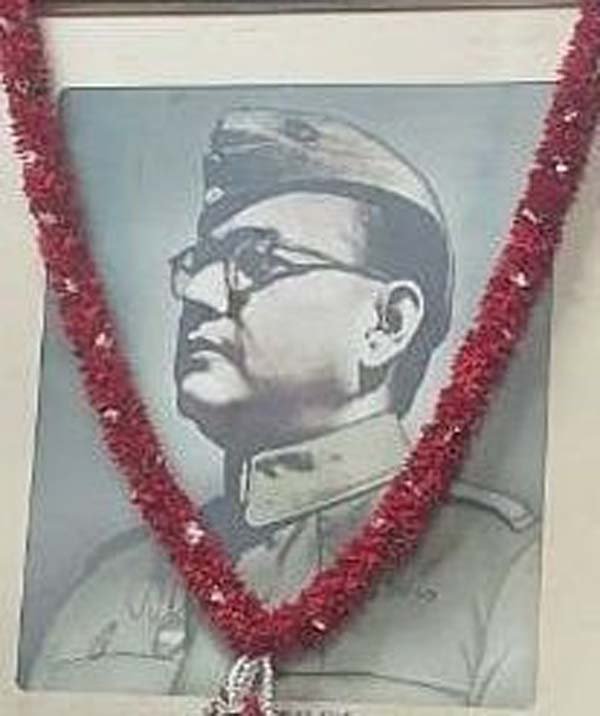
The 129th Birth Anniversary of Netaji Subhas Chandra Bose was commemorated in Kuala Lumpur, Malaysia, by the Netaji Welfare Foundation in collaboration with the High Commission of India and the Netaji Subhas Chandra Bose Indian Cultural Centre. The event served both as a tribute to Netaji’s legacy and as a reminder of the pivotal role played by the Indian National Army –INA-Azad Hind Fauj during the Second World War.
The programme featured a documentary on the INA (Azad Hind Fauj), stage presentations by students on Netaji’s life and ideals, and patriotic renditions of Vande Mataram by local artistes and participants. Scholarly presentations on the INA’s military structure and doctrine, as well as on the revival of the INA in Malaya in 1943, added academic depth to the occasion. Participants dressed in INA uniforms helped recreate the historical atmosphere of the period.
For us, the programme was deeply nostalgic. It revived memories of our interactions, some years ago, with INA veterans who are no longer with us. It also brought back recollections of our readings and research on the INA and its role in India’s freedom struggle.
The significance of the INA for the Indian diaspora in present-day Malaysia and Singapore lies in the fact that the army was founded and organized in this region. Prisoners of War (POWs) initially formed the trained manpower of the INA, but it was the local Indian civilian population that provided volunteers. Notably, the women’s regiment—the Rani of Jhansi Regiment—comprised Indian women who had never seen India but were deeply rooted in Indian culture and values passed down by their parents and grandparents.
While India now has women officers, including pilots, there are no women soldiers in other ranks, except for some in Corps of Military Police-CMP. The inclusion of women officers in infantry and armoured regiments remains under consideration. Against this backdrop, Netaji Subhas Chandra Bose’s decision in 1943 to raise an all-women regiment stands out as visionary. Naming it after Rani Lakshmibai of Jhansi, a heroine of the 1857 uprising, he demonstrated immense faith in the courage and capabilities of Indian women.
The Rani of Jhansi Regiment, commanded by Captain Lakshmi Swaminathan, inspired many women to volunteer, often in the face of family resistance. Captain Lakshmi personally interacted with families to secure their consent, especially in the case of teenage girls. Most recruits had basic literacy and came from rubber estates in Malaya, yet they displayed remarkable commitment and discipline.
The INA’s campaign was marked by immense sacrifice. Many soldiers lost their lives during battles, particularly on the Imphal and Kohima fronts, while others survived without leaving behind adequate records or documentation. Their stories live on largely through family memories and oral histories.
This period also reminds us of the atrocities committed by Japanese forces during the construction of the Siam–Burma “Death Railway.” Thousands of Indians from Malaya were lured or coerced into forced labour under inhuman conditions, leading to widespread suffering and death. Due to the absence of proper documentation, the exact number of Indian casualties remains unknown, though the tragedy has been depicted in books and films such as The Bridge on the River Kwai (1957).
For INA veterans, post-war life was fraught with hardship. Recognition came only after India’s independence, when many were rehabilitated into police forces and later granted pensions, finally acknowledging their contribution to the freedom struggle.
The authors are JNU alumni. D. K. Budakoti is a sociologist, and Dr. Swagata Sinha Roy teaches at a university in Malaysia.
