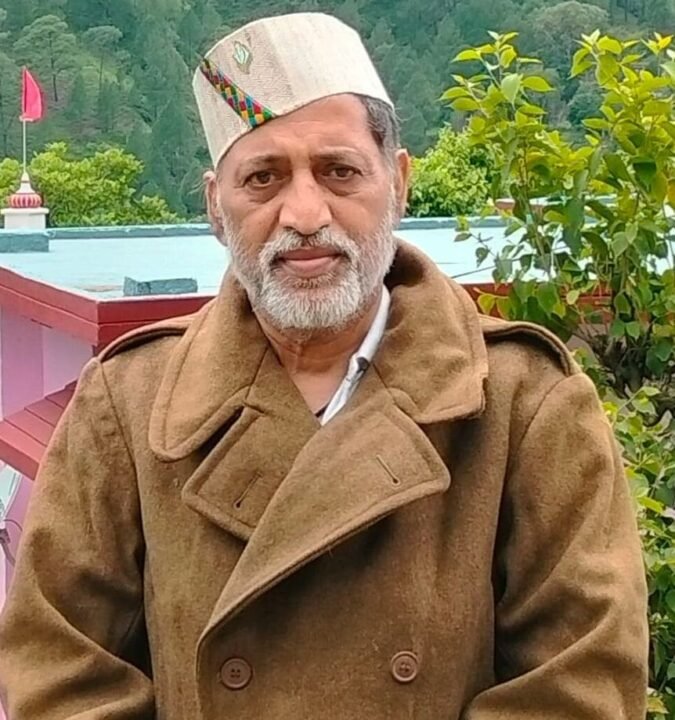
Devendra Kumar Budakoti
Over the last few years, parents and social media discussions in Uttarakhand have increasingly highlighted the difficulty of finding brides. A recurring concern is the search for a “suitable boy”—often defined as someone with a government job and, preferably, property in the plains. From a parental perspective, this reflects a desire for long-term security for their daughters, a form of social insurance in uncertain times. What often remains unexamined, however, is whether such criteria ensure emotional well-being or protect women from unequal or toxic marital relationships.
The concern today is no longer limited to one side. Families now also speak of the difficulty of finding a “suitable girl” for their “eligible boy.” The situation has reached a point where there appears to be a broader crisis in finding suitable partners at all.
Migration from Uttarakhand, which began in the late 1960s and has accelerated over recent decades, has significantly reshaped marriage patterns. Marriages outside caste and community are now far more common. Some argue that love marriages gained momentum precisely because parents were unable to find suitable matches at the right time and place—though arranged marriage remains the dominant norm.
My mother first saw my father at the mandap. She was simply told that she would marry him, without questions or negotiation. She entered her sasural knowing exactly what was expected of her: fetching water, collecting firewood and fodder, cooking, washing clothes—tasks no different from those in her natal home. In later years, familiar saas–bahu tensions and joint-family conflicts persisted, ending only when the family migrated from the village to a town and adopted a nuclear family structure.
Much has changed since then. Today’s bahu is often educated, sometimes employed, and still expected to manage household responsibilities. Technological advancements have reached even remote villages, significantly reducing women’s physical drudgery. Rural households now commonly have running water, toilets, cooking gas, modern kitchen appliances, washing machines, two-wheelers, and improved connectivity through roads, electricity, and transport.
Despite these changes, the attraction of urban chamak-damak—its opportunities, lifestyles, and amusements—remains strong for young men and women alike. In the hill regions of Uttarakhand, inadequate health and education facilities continue to drive migration and encourage marriages outside the village. Ironically, many families settled in towns no longer speak Pahadi dialects at home, yet still insist on finding brides within their caste and community. This raises a crucial question: what is the insecurity associated with a desi girl or boy? If one observes contemporary wedding ceremonies—with their spectacle, extravagance, and borrowed rituals—it becomes clear that cultural erosion is already well underway. Most marriages outside the state or abroad are not only outside caste and community but are also predominantly love marriages.
The gender roles and responsibilities have been slowly blurring down the years and the household chores is done by maids and in many working couples home, even cooking is out sourced. Despite all these changes, families still witness under currents and turbulences at home. The family power equation has not changed and now with the additional players, in-laws and their family members have added to the decision making quorum. !
At the same time, sections of the younger generation are beginning to question the institution of marriage itself. Some engage with the idea of anti-natalism—the belief that one should not bring children into a world marked by anxiety, fear, and suffering. Such ideas, once unimaginable in Indian society, are now part of open discussion.
The growing complexity of finding a suitable partner has created deep anxiety among Indian parents. Should India look to the West, where parents are largely detached from their children’s marital choices, careers, family lives, divorces, and sexuality?
In India, parents worry precisely because family remains central to social life. Marriage binds families and kinship networks, sustaining cultural continuity. Patterns of marriage, family organization, kinship, language, traditions, and rituals have long held Indian society together. The present crisis, therefore, is not merely about brides and grooms—it reflects the deeper challenge of negotiating continuity and change in a rapidly transforming society.
The author is a sociologist and has worked in the development sector for over four decades.
