Many Indian harvest festivals are celebrated around the second week of January, including Makar Sankranti, Bihu, and Ponggal. The Indian diaspora across the world observes these festivals both within the private space of the home and in public arenas such as temples and cultural centres. In Malaysia, where the majority of the Indian population is of Tamil origin—alongside smaller communities of Malayalees, Telugus, and Punjabis—Ponggal stands out as one of the most widely celebrated festivals.
Indians in Malaysia constitute the fifth-largest overseas Indian community globally and form the country’s third-largest ethnic group, accounting for nearly seven per cent of the population. This demographic presence lends visibility and vitality to cultural traditions such as Ponggal, which are observed with enthusiasm across Malaysia.
Ponggal is the traditional Tamil harvest festival that expresses gratitude to nature and to the Sun God for a bountiful harvest. Central to the celebration is the preparation of sweet rice cooked in clay pots and allowed to overflow, symbolizing abundance and prosperity. This ritual extends beyond religious observance; it reflects cultural continuity and culinary knowledge transmitted across generations. In Malaysia, clay pots are commonly sold in Indian grocery stores, especially during the festive season. These pots are not merely functional utensils but also enduring symbols of heritage, identity, and tradition.
We reside in Kajang, a town located about 22 kilometres from Kuala Lumpur’s central business district. Kajang is home to several temples, many of which are more than a century old. These temples were established by Indian labourers who worked in rubber plantation estates during the British colonial period. The rubber plantation economy is largely reduced now and the Indians have since moved into diverse sectors of the Malaysian economy, however the temples have remained, continuing to occupy their original locations.
Historically, every plantation estate had a temple at its centre. These temples served not only as places of worship but also as focal points of social and cultural life—spaces for collective gatherings, rituals, and community bonding. Their continued presence today stands as a testament to the enduring cultural imprint of the Indian community in Malaysia.
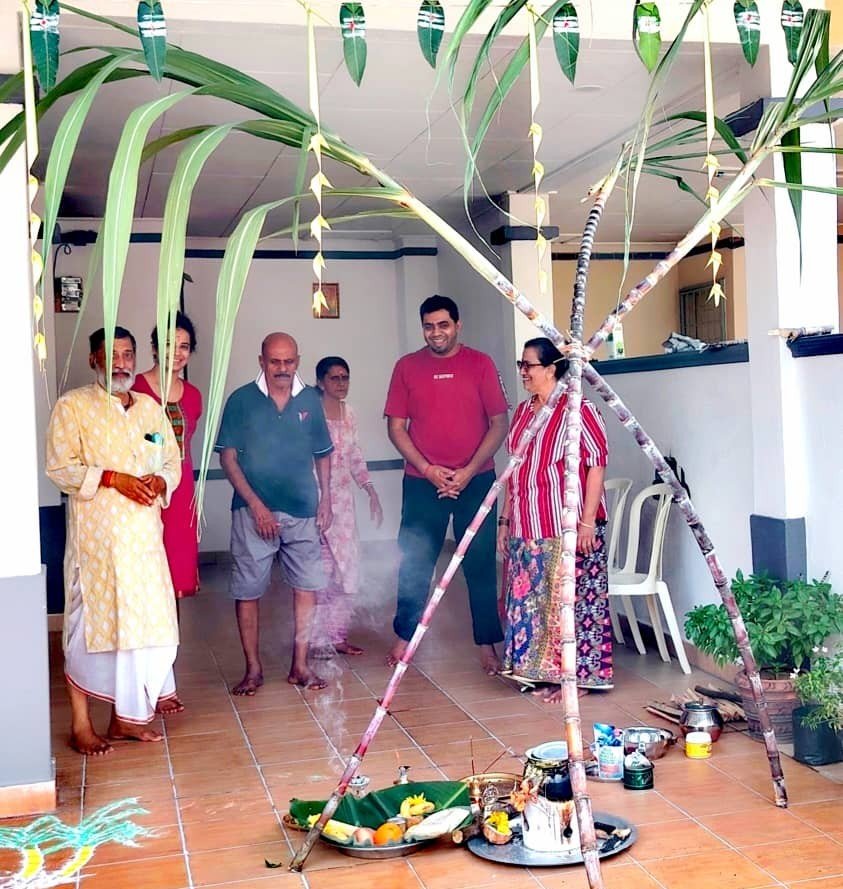
The Ponggal celebrations began early in the morning with the chanting of mantras by temple pujaris, followed by special pujas. The ritual space was carefully prepared, adorned with sugarcane stalks and clay pots arranged for the ceremonial cooking of sweet rice. We circumambulated the temple and sought the blessings of Lord Ganesha, marking the auspicious commencement of the festival.
Later, our South Indian padosi (neighbour) conducted the Ponggal puja and rice-cooking ceremony at their residence. We were fortunate to participate in this intimate celebration, which reflected the warmth of shared traditions and the strength of community ties among the Indian diaspora.
As celebrated in Malaysia, Ponggal is not merely a harvest festival. It is a reaffirmation of cultural roots, collective memory, and the enduring relationship between people, land, and tradition—carried forward across generations and geographies.
The author is a sociologist and is presently in Malaysia with his family.
