Devendra Kumar Budakoti & Swagata Sinha Roy
The Tamil Hindu diaspora in Malaysia celebrates the annual Thaipusam festival in major towns where temples dedicated to Lord Murugan are located. The most prominent celebration takes place at Batu Caves in Kuala Lumpur, which attracts millions of devotees and tourists each year. Over time, the Batu Caves temple complex has become not only a major religious center but also an important heritage site of Malaysia.
Batu Caves is one of the most significant Hindu shrines outside India and serves as the focal point of Thaipusam festivities. In India, the festival is most prominently observed at the Arulmigu Dhandayuthapani Swamy Temple in Palani, Tamil Nadu. Lord Murugan, also known as Kartikeya or Subramanya, is revered as the god of courage, wisdom, and victory over evil.
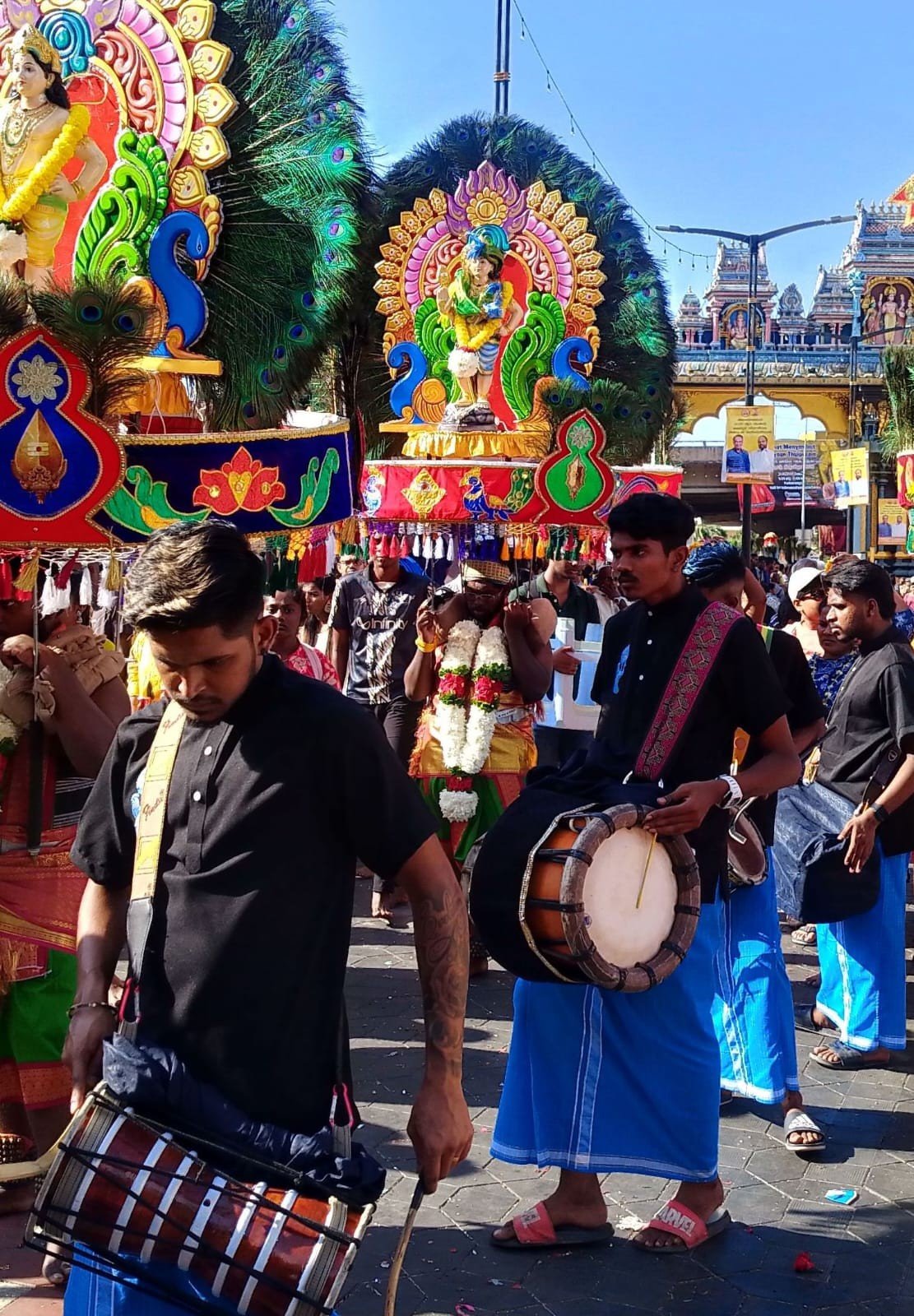
Thaipusam commemorates the divine moment when Goddess Parvati presented Lord Murugan with a spear (vel) to defeat the demon Soorapadman. Devotees undertake acts of penance and devotion by carrying kavadis—ornate structures symbolizing spiritual burden and faith. Many participants also engage in body piercing using hooks, spikes, and tridents, symbolizing sacrifice and purification of the soul.
Kavadis vary in size and design, ranging from simple wooden frames to elaborate structures adorned with flowers, peacock feathers, and images of Lord Murugan. Some devotees carry brass or clay pots filled with milk as offerings. The grand procession begins early in the morning from the Sri Mahamariamman Temple in central Kuala Lumpur and proceeds approximately 14 kilometers to Batu Caves. In earlier times, the sacred chariot was drawn by bulls, but since 1983, a 21-foot silver chariot pulled by a vehicle has been used.
Historically, Batu Caves gained prominence in 1878 when Indian trader K. Thamboosamy Pillai promoted it as a place of worship. Inspired by the cave’s vel-shaped entrance, he established a temple dedicated to Lord Murugan within the caves. Since 1891, Thaipusam has been celebrated here annually during the Tamil month of Thai, which falls in late January or early February. In 2026, the festival falls on February 1.
The original wooden steps leading to the temple were constructed in 1920 and later replaced by 272 concrete steps in 1940. The temple complex comprises three main caves and several smaller ones. The main cave features a high vaulted ceiling and ornate shrines. At the base of the hill lie the Art Gallery Cave and Museum Cave, filled with Hindu sculptures and paintings. Renovated in 2008, this area is now known as Cave Villa. The Ramayana Cave, located to the left of the main complex, showcases scenes from the epic and features a towering statue of Lord Hanuman.
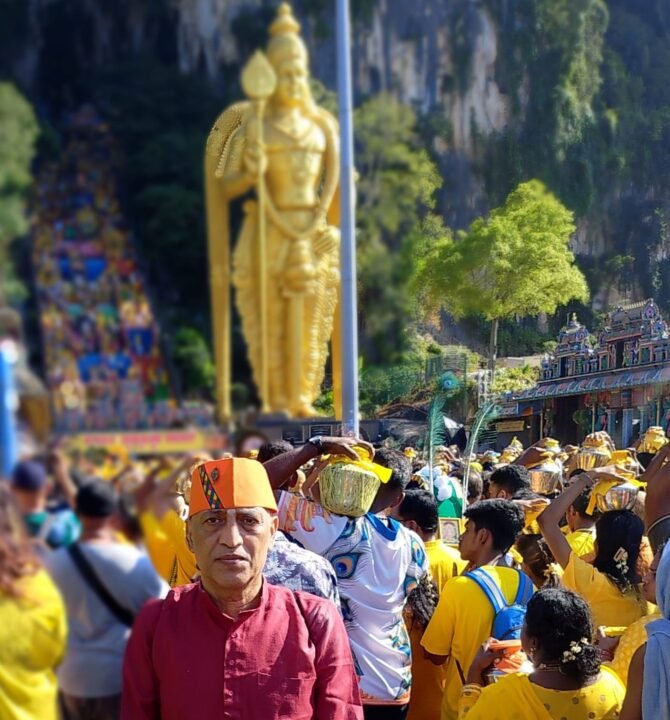
One of the attractions is the 42.7-meter (140 ft) tall Lord Murugan statue at Batu Caves. It is the tallest Murugam statue in Malaysia and the second-tallest in the world; this was inaugurated in January 2006.
Today, Thaipusam has evolved into a major pilgrimage and cultural event, drawing Hindus from around the world. It is also a significant tourist attraction and a public holiday in several Malaysian states. Celebrated over three days, the festival reflects Malaysia’s religious harmony, with people of various faiths participating in the spirit of devotion and celebration.
————
The writers are JNU alumni. D.K.Budakoti is a Sociologist and Dr. Swagata Sinha Roy is with Universiti Tunku Abdul Rahman, Malaysia
