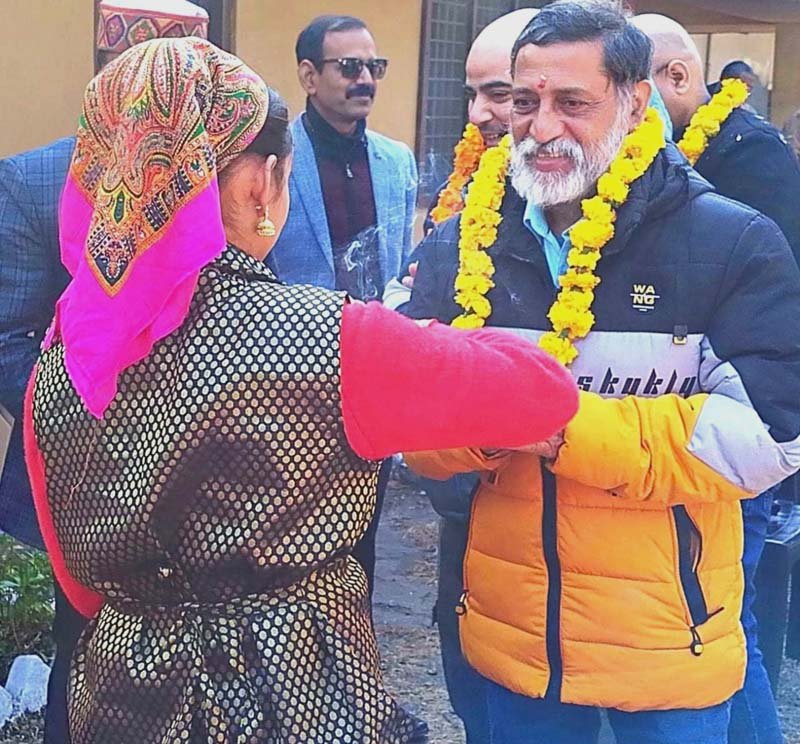
Devendra Kumar Budakoti

The thought of writing on this topic came to me when my padosi, Commodore (R) Ravi Nautiyal, nudged me to share my thoughts on India’s pervasive VIP culture. People like Commodore Nautiyal are often irritated when they see VIPs cutting lines, demanding special privileges, and flaunting their position in public spaces. The general public criticises such behaviour, yet when their own people get the chance to behave like VIPs, they often do the same. In fact, if they do not display these VIP traits, they may not even receive the respect they expect.
In many cases, VIPs feel compelled to show an aura of rank and authority—otherwise people may doubt their status, and worse, may not listen to or obey them.
Let me narrate a real-life incident told to me decades ago by a young Captain in the Indian Army. Captain Biru had gone to his village in the interiors of Uttarakhand. During one of his early annual leaves, he went to fetch water, and with a bucket balanced on his shoulder, he ran into the village panditji. The panditji, not recognising him and assuming he was the younger brother, Suru, asked casually, “I heard your Captain brother is home on leave.” Captain Biru played along and continued chatting as if he were Suru. He even took panditji home and made tea for him.
Still not realising who he was speaking to, panditji asked again where the Captain was. Finally, Biru revealed, “Panditji, I am the Captain.”
Panditji was stunned. In disbelief he exclaimed, “Kis fauj ne tujhe Captain banaya hai?” — Which army has made you a Captain? Clearly, he had never imagined a Captain fetching water and making tea. The absence of the expected VIP attitude confused him.
Our feudal culture runs deep. It shows up in government and private offices where we have people to serve water and tea, move files, and drive us around. In most middle-class Indian homes, we hire people to handle household chores. And if by chance someone from the family is asked to do the same chores, the instant reaction—spoken aloud or muttered quietly—is: “Mujhe naukar samaj rakha hai?” (Do they think I’m a servant?)
This response itself reveals layers of class, caste, and feudal mindsets embedded in Indian society.
At a deeper level—and I have written this earlier—there is one India that dreams of becoming a Neta or Abhineta, and another that strives to be a Mantri or a Sentry. But at the core, both are chasing the same four P’s: Power, Prestige, Paisa, and Pahchan. A VIP, in India, is defined and recognised through these four forces.
One of the early social contract theorists, Thomas Hobbes, believed that the desire for power is constant and restless—driven by the instinct for self-preservation. This desire creates a “war of all against all,” he argued, which can only be resolved by establishing an absolute sovereign—a central authority holding indivisible power to define law, morality, and justice.
In India, VIP culture seems even more pervasive. Is this due to the historical aura of Maharajas, feudal lords, and the British era? The lifestyle patterns of civil and military elites continue in our modern protocols. The British, I feel, borrowed heavily from the rajwadas and rural feudal structures, and this fusion solidified the VIP culture we see today.
The real question is: How do we break free from this mindset when everyone wants to be a VIP?
The writer is a sociologist and has been in the development sector for 4 decades now.
