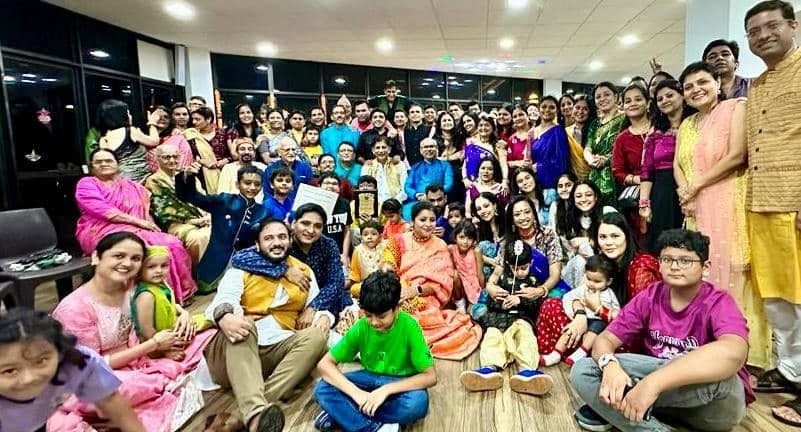
By Suresh Nautiyal Greenananda
A diaspora is not merely a scattering of people across borders; it is a living bridge between landscapes. But a bridge is meaningful only when it carries movement in both directions. Communities that leave their homeland carry memory, language, rituals, and skills. The deeper question is whether they also carry responsibility.
Across history, diasporas have prospered economically and built social networks abroad. They preserve culture through festivals, cuisine, and community life while influencing both host societies and their places of origin. Yet the real measure of a diaspora lies not only in what it preserves overseas but in what it restores, strengthens, and reimagines in its homeland. The ethical foundation of diaspora life is reciprocity.
In the humid air of Singapore—where tropical rain sweeps across glass towers and ships cross one of the world’s busiest harbours—the snow-fed rivers of Uttarakhand may seem distant. Yet a small but vibrant community from the Himalayan state has quietly taken root here. It is an unlikely meeting of altitude and equator, of terraced hillsides and vertical skylines. Unlike earlier waves of Indian migration shaped by colonial labour systems, the presence of Uttarakhandis here reflects aspiration, professional mobility, and the desire to preserve cultural identity.
Migration by Aspiration
Migration from Uttarakhand to Singapore is relatively recent, emerging mainly over the last two to three decades. As Singapore developed into a global financial and technological hub, professionals from the Himalayan state arrived as engineers, IT specialists, bankers, academics, shipping executives, and hospitality managers. Some initially came on short-term assignments but later settled with their families.
This migration was largely voluntary and opportunity-driven. Migration by choice, however, also creates responsibility. Those who leave by aspiration must ensure that their success does not become a one-way extraction of talent from their homeland.
From Informal Gatherings to UASG
In the early years, the community remained small and informal. Families met in homes to celebrate festivals, cook traditional dishes, and reminisce about towns such as Dehradun, Almora, Pauri, or Nainital. Over time, a deeper aspiration emerged—the need to preserve collective identity and pass cultural memory to children growing up far from the mountains.
This aspiration led to the formation of the Uttarakhand Association of Singapore (UASG) in 2013, formally registered in 2015. The organisation became a cultural and social platform dedicated to celebrating heritage, strengthening community ties, and fostering intergenerational continuity.
According to Ravi Dabral, a life member of the association, UASG serves as a home away from home, nurturing unity and cultural pride among Uttarakhandis in Singapore through festivals such as Kauthig, Diwali, and Holi.
Devabhoomi in a Global City
Uttarakhand—often called Devabhoomi, the Land of the Gods—is known for its sacred rivers, ancient temples, and vibrant folk traditions. In Singapore, this landscape survives not in geography but in cultural practice.
The association’s activities revolve around cultural preservation, intergenerational learning, and community bonding. Festivals, music, and dance keep traditions alive while younger generations gain exposure to their linguistic and folkloric heritage.
Kauthig: A Village Fair Reimagined
Among UASG’s most distinctive initiatives is its annual Kauthig, inspired by the traditional village fairs of Uttarakhand. In the mountains, such gatherings celebrate music, dance, crafts, and community life. In Singapore, the event becomes a symbolic recreation of Himalayan culture.
Community halls transform into vibrant cultural spaces. Women wear traditional attire, men don hill caps, and children perform folk dances such as jhora and chanchari. Traditional foods—from mandua dishes to singori sweets—revive culinary memory.
For a few hours, the cultural landscape of Uttarakhand becomes tangible again. Kauthig is more than nostalgia; it introduces younger generations to a heritage they may otherwise know only through stories.
Beyond Nostalgia
Members of the Uttarakhand diaspora in Singapore are largely skilled professionals working in finance, information technology, shipping, education, and hospitality. Their integration into Singapore’s society has been smooth, yet emotional ties to their homeland remain strong. Many maintain connections with their towns and villages and return periodically.
However, cultural celebration cannot be the endpoint of diaspora identity. History rarely remembers diasporas merely for celebrating festivals abroad; it remembers them for contributing to the transformation of their homelands.
For Uttarakhand—a region facing environmental fragility, youth migration, and uneven development—the diaspora holds significant potential. Its professional expertise and global networks could contribute to sustainable tourism, ecological protection, digital connectivity, and rural development.
An Unfinished Journey
The Uttarakhand Association of Singapore represents an important beginning. It has created visibility and cohesion within the community. Yet institutions such as UASG must gradually evolve from cultural conveners into developmental bridges.
The distance between Singapore and Uttarakhand is measured in miles. The distance between potential and action is measured in will. The Uttarakhand diaspora in Singapore has achieved professional success and cultural cohesion—important milestones. Yet the deeper journey, from nostalgia to responsibility, remains unfinished. History will not remember how many festivals were celebrated abroad. It will remember what was rebuilt at home.Top of Form
