Devendra Kumar Budakoti
The history of the Indian National Army (INA)–Azad Hind Fauj is not prominently taught in Indian school textbooks. Many years after India’s independence, INA veterans were formally recognized as freedom fighters and granted pensions by the Government of India.
Among the many factors that contributed to India’s independence, a principal one was the erosion of loyalty to the British Crown among Indian Army and Navy personnel. This shift was significantly influenced by the military activities and leadership of Subhas Chandra Bose, popularly known as Netaji.
Netaji’s call—“Give me blood, and I will give you freedom”—stood in sharp contrast to Mahatma Gandhi’s philosophy of non-violence and civil disobedience.
The INA trials held at the Red Fort in Delhi brought the organization back into national prominence. INA officers were charged with treason, murder, and torture. However, the public outcry during the trial period was unprecedented and largely unexpected by the British authorities. The trials ignited unrest and resentment within sections of the Indian military and naval forces and further galvanized the freedom movement across the country. They also brought wider public attention to the INA’s all-women unit, the Rani of Jhansi Regiment.
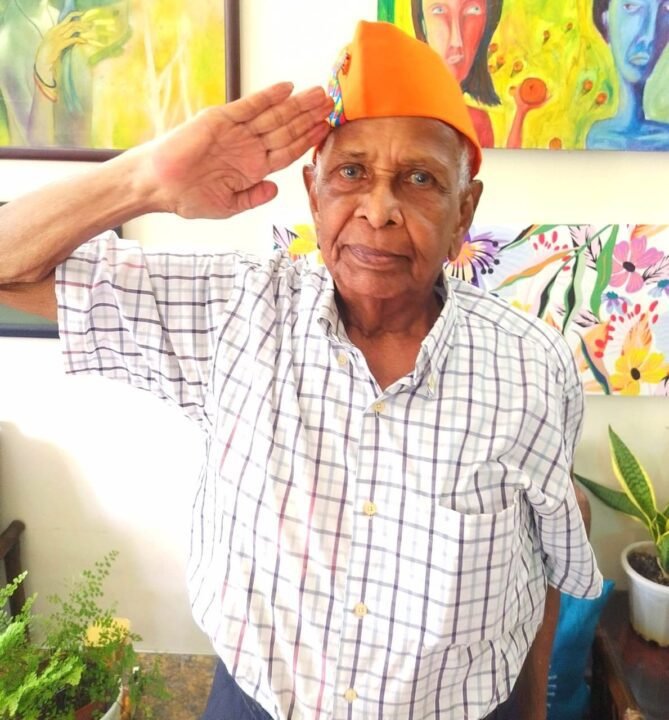
Yet, very little is known about the children—some as young as twelve—who were part of the INA’s Balak Sena. Around 46 adolescents were sent to Japan for two years of military training and became known as the “Tokyo Cadets.” They were sent back earlier than planned following Japan’s defeat and surrender in World War II.
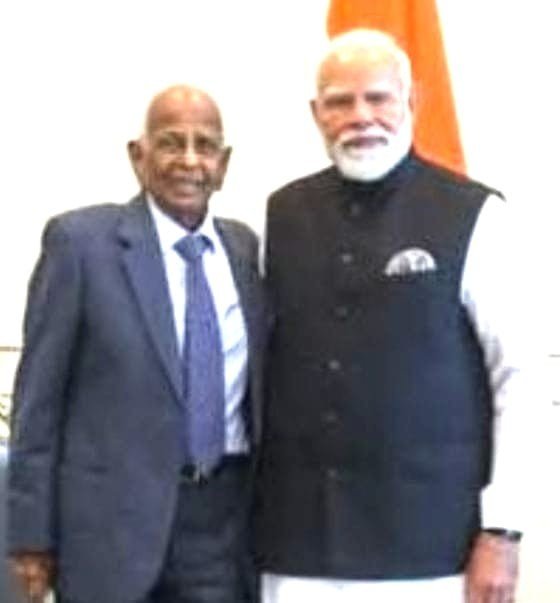
I had only heard about the Balak Sena in passing until I came across a photograph of one of its former cadets, Jeyaraj C. Rajarao, now 94, with Prime Minister Modi during his visit to Malaysia on 7–8 February 2026. Later, I had the privilege of meeting him at his residence in Kuala Lumpur. He has authored a book titled My Odyssey – Revolutionary & Evolutionary, of which I now possess a copy. I had the pleasure of donated one of my Uttarkhandi cap-topi to him.
According to him, “The Balak Sena was purely for young Indian boys between the ages of ten and fifteen. During their three-month in-house course, they were given basic military training, taught the Hindi language, and instilled with patriotism and the objective of freeing India from British rule. I became a member of the Balak Sena when I was just twelve or thirteen years old.”
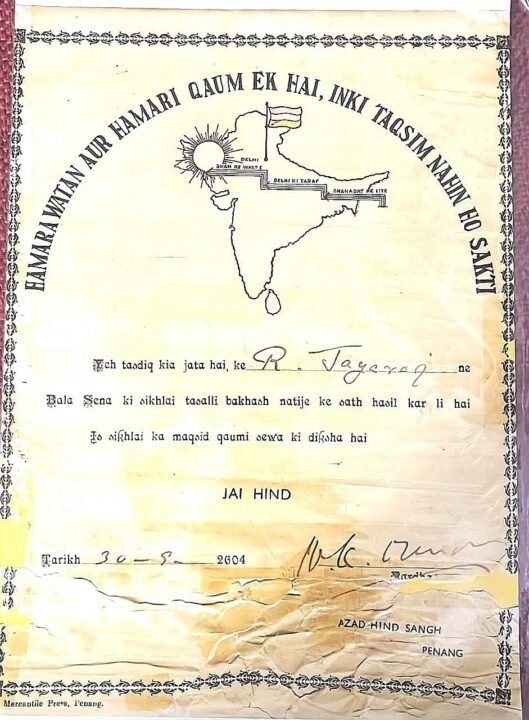
It was his teacher, Mathews, at Penang Free School who recognized his potential and encouraged him to join the Balak Sena. He readily agreed and underwent training on the same school premises in 1944, alongside other INA volunteers.
At one Passing-Out Parade addressed by Netaji, the Balak Sena recruits were also present. Having performed well, Rajarao was garlanded by Netaji. He writes: “I saluted smartly with my rifle and shouted, ‘Netaji Ki Jai, Inquilab Zindabad, Bharat Mata Ki Jai, Chalo Dilli.’ Strangely but spontaneously, all the soldiers and Balak Sena members repeated each of the slogans after me.” That moment deeply inspired and encouraged him.
One can imagine the intense sense of nationalism that motivated these young Balak Sena recruits, along with the volunteers of the INA and the women of the Rani of Jhansi Regiment. Many of them had only heard of India through rituals, traditions, and stories passed down by parents and grandparents in distant lands.
The motivation to join the Indian freedom movement while living abroad must have drawn strength from deep cultural roots, strong family structures, and enduring social moorings.
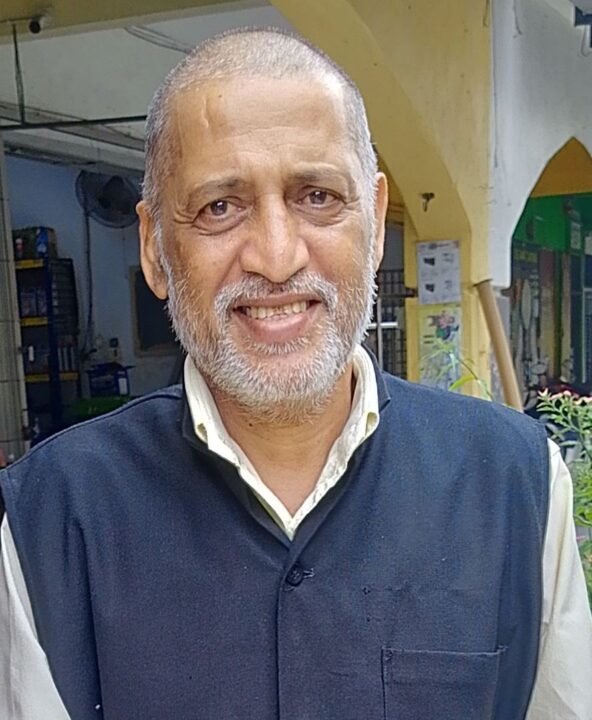
The author is a sociologist and an alumnus of JNU. His research work has been cited in the books of Nobel Laureate Professor Amartya Sen.
